
Karakax mulberry-paper workshops: a slow craft day west of Hotan
I found the paper workshop by following the smell of wet bark and wood smoke down a side lane about 25 kilometres west of Hotan city. A man was beating a pale pulp with a wooden mallet, and a row of square frames leaned against a mud wall with sheets drying in the sun. Nobody had an appointment system. I just walked in, said hello, and was handed a sheet still warm from the frame. That is Karakax County, and that is the whole point of the detour.
Karakax is the Uyghur name for what the maps also spell Moyu, and it means black jade, after the dark stones pulled from the Karakash River that runs through it. The county sits on one of the two jade rivers that feed Hotan, and most foreign drivers blow past it on the way to somewhere louder. They should not. A slow craft day here is one of the better things I did in southern Xinjiang, and almost nobody in the guidebooks mentions it.
The drive west from Hotan city
The workshop villages are 20 to 30 kilometres west of Hotan city on the oasis roads, an easy half-hour run if the air is clear. The road is paved and flat and lined with poplars, the classic Hotan green tunnel, and the driving is dull in the good way. I filled in Hotan before leaving and treated the county as a there-and-back, because the fuel options thin out fast once you leave the city ring.
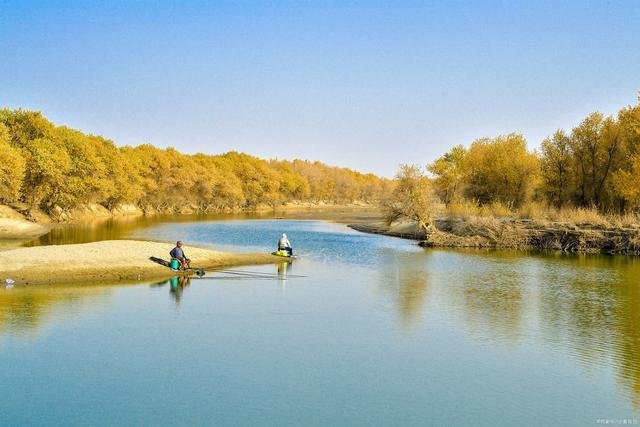
Timing the drive matters more than the distance. Spring, roughly March into April, is the sand season, when the wind off the desert lifts the topsoil and lays a haze across the whole oasis that turns the poplars into grey ghosts. I drove it in late October and the air was clean and the light was low and gold. If you must come in spring, start after the worst of the morning dust settles and keep your speed down, because the haze comes in bands and the road edge vanishes without warning. On the quiet oasis roads around Pishan County further west the same haze behaves the same way, so the lesson travels with you.
Watch the intersections. The oasis is a grid of canals and field tracks, and the sat nav will happily send you down a lane that ends at a ditch. I took one such wrong turn and spent ten minutes reversing past a flock of geese before a boy on a bike pointed me back to the main road. Nobody was in a hurry. That is the rhythm of the place, and it is worth matching.
Finding the paper village without an appointment
The mulberry-paper workshops are clustered in a couple of villages rather than signed as a single attraction, and the honest move is to ask in Hotan or at your guesthouse which lane is working that day. Some workshops close when the master is in the fields, so a call ahead through a local contact helps, but I arrived cold and still found one open. Knock, smile, and offer to buy something. The craft survives on visitors who actually purchase, and the welcome follows the wallet in a fair way.
Expect a yard, not a museum. There is a pile of mulberry branches, a iron pot, a stone beater, and a wall of frames. The families here have done this for generations, and the older masters learned from fathers who learned from grandfathers. You can watch the whole process in twenty minutes if they are mid-batch, or wait an hour if they are starting one. I waited, and the waiting was the interesting part. The bark has to be fresh-stripped to beat right.
How the mulberry paper is actually made
The process is older than the tourism that now props it up, and it is hands-on from the first cut. It starts with stripping the bark from mulberry branches, the pale inner layer that gives the paper its name, sang pi zhi, or mulberry skin paper. The bark is boiled with wood ash to loosen the fibre, then rinsed and beaten on a stone until it is a uniform pale pulp. I watched a master work the mallet in a slow rhythm for a full ten minutes on a single batch, and his arms said this was a day’s labour, not a demo.
From there the pulp goes into a shallow tub of water, and the sheet is formed by dipping a flat wooden frame fitted with a fine screen, then rocking it so the fibre settles evenly. The trick, the part that looks easy and is not, is the float: the frame rides the water surface and the pulp lays itself out as the water drains. The sheet is then lifted, still on its frame, and leaned against a wall to sun-dry. When it is ready the paper peels off in one piece, faintly textured, tough, and faintly cream in colour. A finished sheet sells for roughly ¥20 to ¥60 depending on size and finish, and a small bound book runs ¥80 to ¥150.
The whole thing is low-tech on purpose. No bleach, no machine, no shortcut that survives the climate. The ash boil is what gives the paper its long life, and the sun dry is what gives it the warp you can feel under your thumb. I bought a sheet and held it to the light, and the fibres ran through it like a faint map. That is the appeal for calligraphers, who like the tooth and the way ink sits on the raw surface.
Why the craft nearly died
The paper nearly vanished in the late twentieth century, when factory paper arrived cheap and the old uses, for contracts and correspondence and wrapping, dried up. A craft that needed a full day for a few sheets could not compete with a ream from a truck. For a while the workshops fed mostly on local demand for Qurans and poetry, and even that thinned. What saved it was the turn toward calligraphy and craft sales, the slow realisation that a handmade sheet is a thing people will pay for as a thing, not just as a surface.
Now the masters sell to artists, to collectors passing through, and to travellers like me who want something flat and honest to carry home. The county has pushed the workshop as a small heritage stop, but it has not yet been swallowed by it. The welcome is real because the income is real, and the income is real because visitors buy. I came away thinking the right move for any craft town is exactly this: keep the work genuine, let the buying support it, and skip the stage show. Karakax does that better than most.
Buying a sheet and carrying it home flat
If you buy, buy a sheet or a small book and treat it like the fragile thing it is. The paper is tough but the corners curl, and a rolled tube is the wrong answer because the sheet cracks on the crease. I slid my sheet between two pieces of card I begged from the workshop, taped the edges, and carried it in a rigid folder for the rest of the trip. It flew home in my checked bag flat against the side, and it arrived without a fold. A small bound book is easier: it travels like a notebook and survives a backpack.
Negotiate lightly and pay fairly. The prices are honest and the masters know the value of their day. I paid ¥40 for a sheet and ¥120 for a little book of blank pages, and I would pay it again. Do not expect a receipt or a card machine. Cash is the language here, and the workshop will appreciate the notes more than a tap. Wrap it before you leave the yard, because the oasis wind finds any loose paper and runs with it.
The jade river and the roadside trap
The Karakash River is the reason the county has its name, and the riverbed is where locals still go looking for jade after the melt. You will see men with sieves and buckets working the gravel bars, and you will see roadside stalls selling stones by the bag. Here is the plain advice: do not buy jade from a roadside stall. The good material is rare, the river is picked over, and the stalls are full of coloured glass and imported rough priced like the real thing. I watched a stallholder tell a tourist a grey pebble was black jade for ¥200, and the tourist believed him.
If you want jade, go to Hotan, the jade city of the southern Silk Road, where the established market has grades and some recourse, and even there buy small and buy sceptical. The river itself is the better souvenir: stand on the bank, watch the picker with the sieve, and leave the stones where they lie. The Karakash gives the county its story, and the story is free to watch. The stones are not worth the gamble.
Food in the Karakax bazaar
The county bazaar is the other reason to slow down. On market day the lane behind the paper villages fills with stalls selling melon, walnuts, and the long red chilis that southern Xinjiang is known for, and the food counters do a steady trade in nang and grilled meat. I ate a plate of polo, the carrot and rice mound, for ¥15 and a string of kebabs for ¥2 each, and washed it with a pomegranate juice pressed in front of me for ¥8. The bazaar is cash-first and patient, and the vendors will press a slice of melon on you whether you buy or not.
Go hungry and go early. The good stuff sells by noon and the stalls fold by mid-afternoon in the cold months. I made the mistake of arriving at two once and found the meat counter down to a few sad wings, so I ate noodles instead and liked them fine. The lesson is the same as the canyon gate up north: the oasis keeps its own hours, and the hours favour the driver who shows up before lunch.
Pairing Karakax with the wider south
Karakax fits naturally into a slower Hotan loop, and the craft is the anchor for a day that otherwise slips past. From the paper village you can drift back into Hotan, the jade city of the southern Silk Road, for the old town and the jade market, or widen the frame to the wider world of Xinjiang handicrafts, where the mulberry paper sits alongside carpets, knives, and embroidery as one thread of a much longer making tradition. Seeing the paper as one craft among many made the county feel less like a stop and more like a chapter.
Two other detours are worth the fuel if your route runs that way. North of the Taklamakan, the hand-forged knives of Yengisar are a different craft entirely, steel rather than fibre, and the forges there ring the same honest note as the paper yard. And east into the sand, the desert village of Daryabuyi deep in the sand shows you the oasis’s edge, where the river fails and the dunes take over. Karakax is the gentle entry to all of it, the craft day that teaches you to look at the small things before the big ones.
I left Karakax with a flat sheet of paper in a card folder and a better sense of why the south rewards a slow driver. The county asks little: a half-hour run, cash in your pocket, and the patience to watch bark become a sheet in the sun. Skip the jade stall, eat at the bazaar, and let the workshop master show you the float. That is the whole visit, and it is one of the few in Xinjiang where you can still walk in unannounced and watch a craft happen in front of you.