
Xinjiang Highway Tolls and ETC: A Self-Driver’s Real-World Cost Guide
The two things first-time drivers into Xinjiang get wrong are fuel and tolls. Fuel is simple: the pump shows the price, you fill up, you know where you stand. Tolls hide behind the odometer, ticking up segment by segment, and you only learn the day’s total when the bar lifts at the exit. My first run south from Urumqi, the number on the screen was a fair bit higher than my own estimate. Later I realised a provincial boundary had stacked another stretch on top, and the ramp counted too.
This piece takes Xinjiang’s highway toll logic apart: how the network is laid out, how the money is worked out by vehicle class and kilometres, what the common routes actually cost, how to get ETC, whether an out-of-province plate can use it, and whether the old saying “some national highways cost more and wander further than the expressway” holds up. I use my own roads and my own payments wherever I can.
First, where Xinjiang’s expressways go
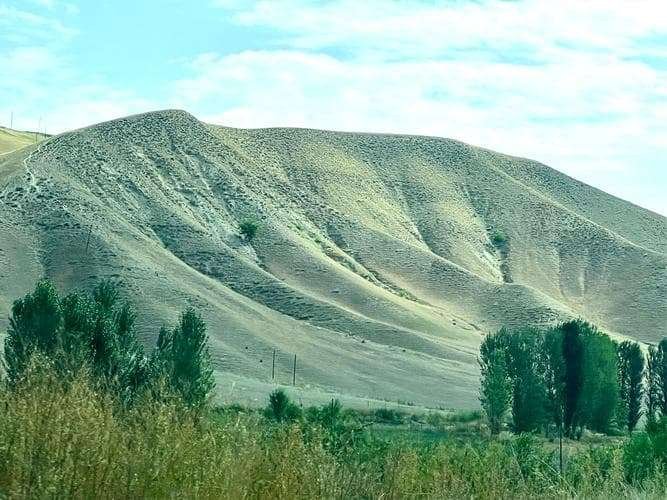
Xinjiang is big and so are its roads. In other provinces you cross a border after two or three hundred kilometres; in Xinjiang you can drive that far and still be inside one prefecture. The main one is the G30 Lianyungang–Khorgos expressway, entering at Xingxingxia, running through Hami, Shanshan and Turpan to Urumqi, then west through Shihezi, Kuitun and Jinghe toward Khorgos. The G7 Beijing–Urumqi expressway comes from Inner Mongolia and Mingshui, taking a northern gobi route to Urumqi. South Xinjiang runs on the G3012 Turpan–Hotan expressway through Korla, Kuqa and Aksu to Kashgar.
One reality up front: many of Xinjiang’s best places have no expressway. Kanas, Hemu, the Duku Highway, the Pamirs — the final stretch is national or provincial highway, not tolled. A twenty-day northern-and-southern loop of mine covered over 6,000 km, but only about 2,300 km was on toll expressways; total tolls came to just over 800 yuan, roughly 40 yuan a day. Tolls are never the big item, but they involve ETC and cards, so sort them beforehand. For the wider picture see the internal transportation guide.
How the money is worked out
China’s toll logic is one formula: your vehicle class times the per-kilometre rate on that road, times the kilometres you drove. A Class 1 passenger car (under seven seats) in Xinjiang runs roughly 0.3 to 0.45 yuan per kilometre, most ordinary stretches between 0.35 and 0.4 — lower than the Yangtze delta’s 0.45–0.5. Example: a five-seat SUV from Urumqi west on the G30 to Jinghe, about 420 km at 0.38 yuan, equals 159.6 yuan; at the barrier it comes to 155–165 after segment rounding.
Why the per-kilometre price shifts on one road: each segment was built by a different entity in a different year, so rates differ. State-funded trunk roads are restrained; local financing-platform stretches sit a little higher. The Urumqi–Turpan stretch averages above 0.4, while the older G30 toward Shihezi may be about 0.33. My rough mental method: divide kilometres by three, take ninety percent for a floor, or estimate at 40 percent for a ceiling. On the road, that order of magnitude is enough to decide expressway or national road.
Routes I have actually paid for
These are what I paid over the last few years for a Class 1 car after the ETC 5 percent discount.
Urumqi to Turpan, about 180 km on the G30, 65–72 yuan — one of the busiest stretches, jammed on weekend returns. Urumqi to Kuitun, about 250 km, 90–100 yuan; leave at 8:30 and eat laghman in Kuitun by noon. Urumqi to Hami, about 580–600 km east, 210–230 yuan, a full day of gobi. Kashgar to Aksu, about 460 km north on the G3012, 160–180 yuan. Urumqi to Yining, about 650 km via Jinghe, 240–260 yuan; the Guozigou Bridge stretch is the best scenery on any Xinjiang expressway.
Coming in from inland: the G30 from Gansu through Xingxingxia is about 600 km, 230–240 yuan combined Gansu and Xinjiang; the G7 from Inner Mongolia is over 1,200 km, 400-plus yuan. Provincial boundaries are now barrier-free — the system tallies by province in the background and the bill shows two records. My fifteen-day north-and-south loop totalled 5,100 km with about 2,000 km tolled; tolls were just over 730 yuan, under 6 percent of total spend, against 3,200 yuan of fuel. Plan tolls as tens to just over 200 yuan a day.
How to get ETC, and out-of-province plates
Any regular civilian plate, whatever province, can get ETC and use it in Xinjiang — the national network has been unified for years. ETC has two models: a stored-value card you top up, and a postpaid card bound to your bank card, WeChat or Alipay that deducts automatically. I only recommend postpaid: no pre-charge, clear phone bill, automatic discount. Apply through a bank app, the WeChat ETC mini-program or Alipay; the OBU ships home for self-install.
The device is bound to the plate — change the car and it is dead, re-apply. Renting: most companies fit ETC; confirm on pickup whether it is activated and whether tolls are included or billed separately. A cross-city return may freeze a deposit by pre-authorisation. For pick-up and return practice see the how to get around guide.
No ETC still works: the CPC card trap
Without ETC, take a CPC pass card at entry and pay at exit — cash, WeChat, Alipay or bank card all work, though carry 100–200 yuan in case the network drops. The pitfall: lose the CPC card and the system bills you for the farthest distance, not where you started. A friend lost his in southern Xinjiang and a 100-odd-yuan stretch was billed at over 300. Tuck the card in a fixed spot; the postpaid ETC has no physical card to lose.
ETC lane or staffed lane
Blue “ETC” signs are dedicated lanes that lift fast if you slow below 20; yellow or green “staffed/mixed” signs are for cars without ETC. Do not charge into the ETC lane without a device — the bar will not lift and the queue builds. The ETC lane is fast, but coast in and give it gas only once the bar lifts; barreling in at 30 risks a hard brake. If ETC fails, press the intercom and the attendant issues a manual slip; the passage is still recorded. EVs and motorhomes are tolled the same as fuel cars by class — green plates get no special rate, and a motorhome misread as freight can be overcharged, so keep the receipt and dispute later.
Boundary segments, ramps and holidays
Provincial boundaries are barrier-free now, but the bill splits into segments that look odd yet sum correctly — open the ETC mini-program after a long trip. Ramps and interchanges add a few yuan you did not calculate, and some segments charge a 5–10 yuan minimum, so frequent short trips are poor value; within 30 km the national road is often cheaper. Four holidays — Spring Festival, Qingming, Labour Day, National Day — make the expressway free for cars under seven seats; the test is your exit time. I once drove three extra hours to exit before National Day midnight and saved over 200 yuan, but the crowds at peak are real, so I use the free window only for long, expensive legs.
The “national roads save money” myth
Online people say Xinjiang’s national roads are free and scenic, skip the expressway. Half true — but if you take the national road purely to save tolls, the account usually loses. My Urumqi-to-Korla comparison: expressway about 500 km, tolls 180 yuan plus 300 yuan fuel; the old G216 added 70 km, nearly ten hours, and 340 yuan fuel — saved 180 in tolls, spent 40 more on fuel, lost three and a half hours, plus an extra night’s lodging and tyre wear. National roads win only when the road itself is the destination (Duku, Yizhao), when the expressway detours absurdly, or when you want villages and roadside food. Speed cameras are no less dense on national roads; details in the speed limits and fines guide.

Service areas and checkpoints
Parking at China’s expressway service areas is free, Xinjiang included — stay as long as you like. Along the G30 they sit every 50–80 km; on the G7 no-man’s-land they can be over 100 km apart, so take every service area you see. Rest-area parking also hides a trick: tired on a long haul, nap in the lot rather than push drowsy. One Xinjiang special: the toll barrier and a security checkpoint are often neighbours a few hundred metres apart. Budget 15–20 minutes per “barrier plus checkpoint” combo, keep documents at hand, and remember the checkpoint charges nothing — only the barrier takes payment.
Most-asked questions
Beyond the ETC discount there is no hidden offer; getting the card is free, beware anyone charging a device fee. One car maps to one ETC device, but you can apply separately per car. Tolls can bind to Huabei or a credit card. ETC deducts even with no phone signal, because it uses short-range communication at the bar. If a deduction looks wrong, check segments first (ramp and minimum charges), then call the issuer with plate and time. With a postpaid card there is no top-up — just keep the bound account funded and confirm the device is active before you enter.
My toll lessons
Before departure get ETC, postpaid, bound to WeChat or Alipay; out-of-province plates included. Tolls are not the big item — a whole loop caps at a few hundred yuan, so do not detour far to save them. Without ETC, watch that CPC card. Boundary barriers are barrier-free now; ramps and minimum charges add a few yuan, normal. National roads are toll-free but not money-saving once you add time, fuel and wear. Service-area parking is free — use it. Make a three-row table of tolls, fuel and lodging per day; the value is seeing where money goes, not saving fen. In the end, tolls should never anxiety you — get ETC straight, remember the common fares, and let the odometer do the rest. At the bar, it lifts, you move on, keep driving.