
Xinjiang Street Food Tour: 15 Must-Try Snacks Under ¥20
I ate ¥97 worth of street food in one evening at the Kashgar night market in September 2024 and could not finish it. Two of us, fourteen items, three hours. That number sticks in my head because I had budgeted ¥200 and walked away with change and regret about the second bowl of cold noodles.
Xinjiang street food is cheap in a way that surprises people arriving from Chengdu or Shanghai. The reason is structural. Most of it is grain, offcuts of lamb, dairy from animals grazing 80 km away, and fruit that would rot before reaching a supermarket. Nothing here is engineered for tourists. It is engineered for a bricklayer who needs 900 calories for ¥12.
Here are fifteen things worth eating, all under ¥20, with what I actually paid and where.
1. Lamb Kebab (Kawap) — ¥4 to ¥8 per skewer
The obvious entry, and still the best value on the street. Cubes of lamb alternating with fat, dusted with cumin, chilli and salt, cooked over charcoal in a long narrow grill. A proper skewer has four to six pieces and at least one that is nearly pure fat, which is the point and not a mistake.
Prices in 2024 to 2026: ¥4 to ¥5 in Hotan and small towns, ¥6 in Kashgar, ¥7 to ¥8 in central Urumqi. Three skewers is a snack. Six is dinner.
Watch for the red-hot flat skewer trick where a vendor waves a smoking grill at you. Fine, it is theatre. What matters is whether the fat is rendered and slightly crisp at the edges. Undercooked lamb fat is unpleasant and I have had it twice, both times from stalls with no queue. Our full breakdown lives in the Xinjiang kebab guide.
2. Samsa — ¥5 to ¥7
Diced lamb, onion, cumin and black pepper wrapped in a stiff pastry, stuck to the wall of a clay oven and baked until the bottom is a brown shell. The good ones leak juice when you bite the corner. The bad ones are dry and 70% onion.
I buy from a stall on the east side of Kashgar’s Ostangboyi lane, ¥6 in 2024, and I have gone back four times because his ratio is right. Eat within ten minutes of purchase. A cold samsa is a different and worse food.
3. Girde Nan — ¥2 to ¥3
Small ring bread, chewy rim, crisp middle, out of the oven at intervals all day. It is the cheapest hot thing you can put in your hand in Xinjiang. Two of these and a yoghurt is a legitimate breakfast for ¥8.
4. Tonur Eggs — ¥3 each
Eggs baked in the residual heat of a bread oven, sometimes for hours. The white turns faintly tan and the yolk goes fudgy and slightly smoky. They sell them by the basket at bazaars in Kashgar, Yarkant and Hotan.
I was skeptical the first time. Then I ate three. They are better than boiled eggs by a wide margin and travel well in a jacket pocket for a morning bus.
5. Hoshan (Fried Meat Dumpling) — ¥10 to ¥15 for four
Square pockets of dough filled with lamb and onion, shallow-fried in a wide flat pan, then steamed under a lid so the top stays soft while the base goes gold. Vendors flip the whole pan contents in one motion, which is worth watching.
Standard price is around ¥3 each. Order two if you are grazing. The chilli vinegar on the counter is not optional.
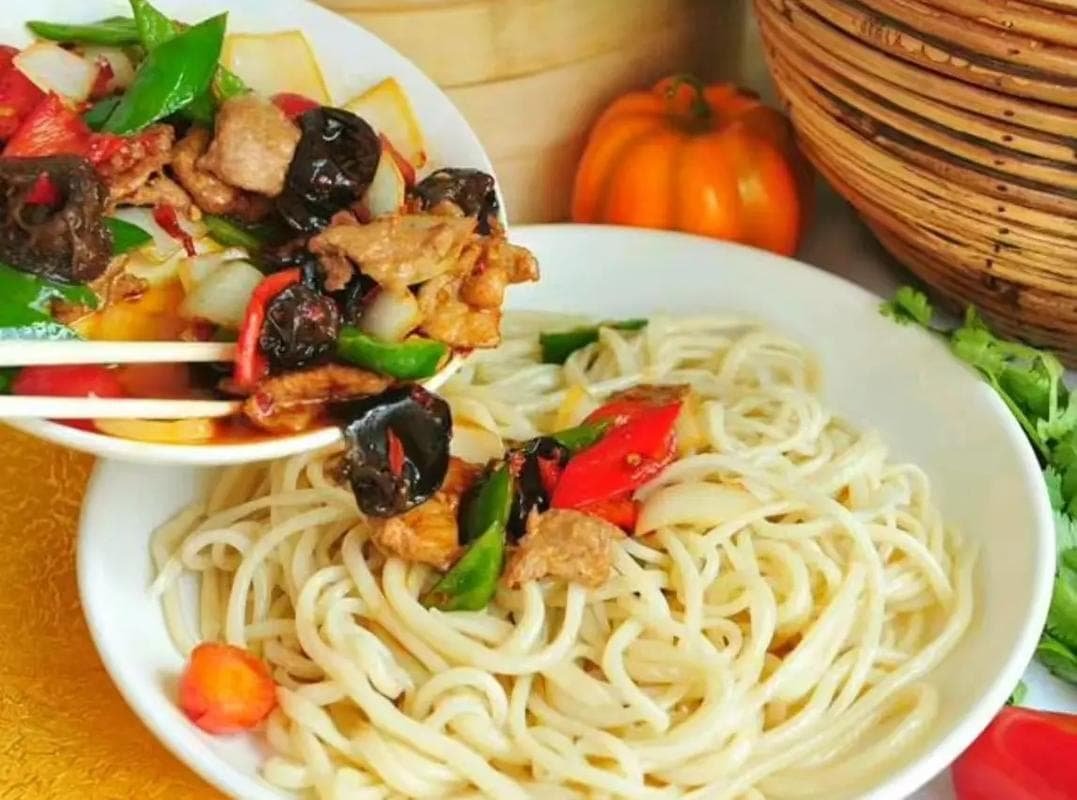
6. Liangpi (Cold Skin Noodles) — ¥8 to ¥12
Wheat starch noodles, wide and slippery, served cold with vinegar, garlic water, chilli oil, cucumber and sometimes a slab of gluten sponge. Cooling, sour, hot with chilli. Everywhere in Urumqi and Turpan in summer.
¥10 is the usual price. In Turpan in July, when the air temperature hit 43°C on the thermometer outside my guesthouse, I ate this twice a day for four days.
7. Dogh (Yoghurt Drink) — ¥5 to ¥8
Thinned yoghurt, salted or plain, sometimes with ice, poured from a metal tub. Sour and sharp. It is the correct antidote to a plate of lamb.
Sold in disposable cups at bazaars. My stomach handled it fine on every trip, but this is unpasteurised dairy from a bucket, so if you have a sensitive gut, start with a small cup on day three rather than a large one on day one.
8. Hand-Churned Ice Cream (Madu) — ¥5 to ¥10
Milk, sugar, sometimes egg, churned in a metal drum packed with ice and salt, hand-cranked by a vendor who has done it 400 times that day. Texture is dense and slightly icy rather than smooth. Served in a small cup or on a naan-like wafer.
¥5 in Kashgar bazaars, ¥8 to ¥10 at tourist-facing stalls in Urumqi. More on the dairy tradition behind it in our Xinjiang dairy products guide.
9. Yoghurt with Rice Pudding — ¥8 to ¥12
A brick of sticky rice, sometimes with jujube, buried under thick set yoghurt and drizzled with rose syrup or honey. Uyghur vendors call it a summer dessert. It is dense enough to replace a meal.
Kashgar Old Town charges ¥10. I paid ¥8 at the Hotan Sunday market from a woman working a fold-out table.
10. Pomegranate Juice — ¥10 to ¥15
Pressed in front of you on a hand-cranked press, usually four to six fruit per cup. Season runs September through November, with cold-stored fruit stretching it into winter.
Prices climb in tourist zones. Kashgar Old Town main lane wants ¥15. Two streets off, ¥10. In Hotan in October I paid ¥8 and the vendor added a seventh pomegranate because the cup was not full.
11. Sangza (Fried Dough Coils) — ¥10 per bundle
Thin strands of dough looped and deep-fried into a golden nest, brittle, faintly sweet. Made in huge quantities before Eid and available year-round in bazaars. Shatters everywhere when you bite it. Buy a small bundle unless you are sharing.
12. Grilled Corn — ¥5
Not exotic, but the corn in the Ili Valley and around Turpan is genuinely good, and it appears on charcoal grills next to the meat. ¥5 a cob. It is the item I buy when I have eaten too much lamb and need a break, which happens around day four of every trip.
13. Roasted Lamb Liver and Heart Skewers — ¥5 to ¥7
Cheaper than muscle meat, cooked faster, more assertive. Liver goes from perfect to chalky in about forty seconds, so buy from a grill that is busy enough to be cooking to order. Heart is firmer and more forgiving.
This is where the value is if you are eating on ¥60 a day. Two liver skewers, a naan and a dogh comes to about ¥20.
14. Matang (Nut and Fruit Cake) — ¥10 to ¥20 (See the Warning)
Slabs of walnuts, raisins, jujube and sesame bound with honey or maltose, cut off a huge wheel with a cleaver. Genuinely delicious and genuinely the one item where travellers get stung.
The problem is pricing by weight, quoted per jin (500 g), with vendors who cut a piece far larger than you gestured at and then present a bill of ¥180. This has happened to people I know twice.
How to avoid it: agree the price and the size before the knife moves. Say the number in yuan you want to spend, hold up the note, and let them cut to that. ¥10 to ¥20 buys a decent chunk. If a vendor refuses to cut to a fixed price, walk away. Plenty do not play this game, especially in Hotan and Yining.
15. Bosten Lake Grilled Fish — ¥15 to ¥20
Around Korla and Bohu county, freshwater fish from Bosten Lake get split, skewered flat between two sticks, and grilled over charcoal with cumin and chilli. Portion size varies with the fish. ¥15 to ¥20 for a small one.
Odd to find fish in a desert region until you remember Bosten is 1,000 square kilometres of it. I ate this at a roadside cluster of grills on the G218 in 2022 and it was the best thing I ate that week.
Three Routes to Eat All This
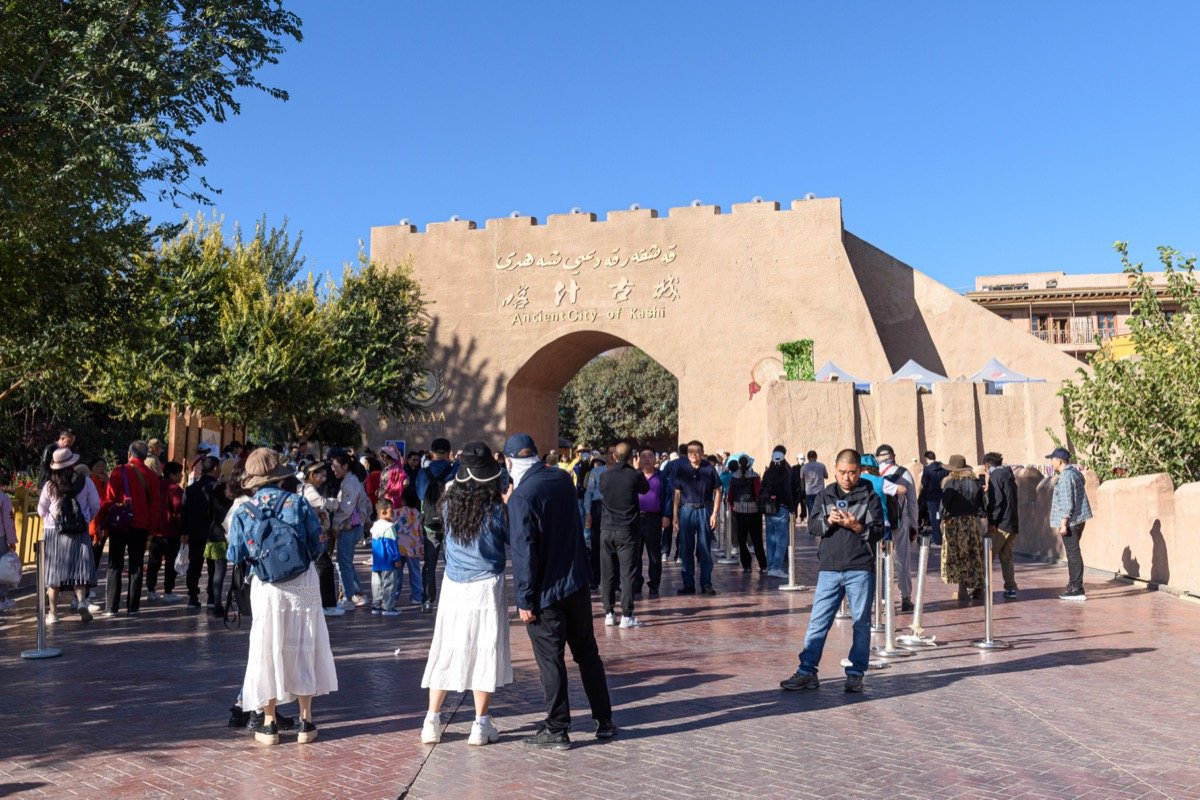
Kashgar Night Market (Ordaxiq Street area)
Opens around 19:00 Beijing time, peaks 21:00 to 23:00, roughly 60 to 80 stalls in summer. Best single location in the region for coverage. Start at the entrance with kebabs, work inwards for hoshan and pigeon soup, finish with ice cream at the far end. Budget ¥50 to ¥80 per person and you will overorder. Pair it with a daytime wander through the Kashgar Old Town.
Urumqi: Wuyi Night Market and the Grand Bazaar
Bigger, more Han and Hui influence in the mix, higher prices by about 30%. The Grand Bazaar area is convenient and overpriced. Wuyi night market is where locals actually go. Both are a short taxi ride from the Xinjiang Regional Museum, which makes a decent afternoon-then-evening pairing.
Hotan Sunday Market
The cheapest of the three and the least polished. Food occupies the perimeter of a market that is mostly selling livestock, jade, carpets and hardware. Prices run 20 to 30% below Kashgar. Sunday only, best between 10:00 and 14:00.
Practical Notes From Eight Trips
- Cash and QR both work. Nearly every stall has a WeChat and Alipay code taped to the cart. Carry ¥100 in fives and tens anyway for the ones that do not.
- Point and hold up fingers. Numbers plus pointing covers 95% of transactions. Qanche pul means how much.
- Stomach strategy. Grilled meat and baked goods are the safest. Unpasteurised dairy and cut fruit carry more risk. I have been ill once in eight trips, from a cold noodle bowl in a bus station, not from a street grill.
- Timing. Bazaar food peaks in the morning. Night markets run 19:00 to 00:00. Between 14:00 and 18:00 the street food scene mostly disappears.
- Ramadan. Daytime stalls thin out considerably in Muslim neighbourhoods. Evenings after sunset get very busy.
- Vegetarians. Harder but survivable. Naan, liangpi, corn, yoghurt, fruit, sangza, tonur eggs. Roughly ¥30 a day.
What ¥100 Actually Buys
My standard night market order for two people, tested repeatedly:
- 6 lamb kebabs, ¥36
- 2 samsa, ¥12
- 1 girde nan, ¥3
- 4 hoshan, ¥12
- 1 liangpi, ¥10
- 2 dogh, ¥12
- 2 ice creams, ¥12
Total ¥97. That is what I could not finish in Kashgar, and it is still roughly what a comparable evening costs today.
Start with three kebabs and a girde nan while you walk the full length of the market once without buying anything else. Then double back to the two stalls with the longest queues. That method has not failed me yet.